Your dog threw up on the sofa at 2 a.m. and your first thought wasn't "is he okay." It was "that stain is never coming out of that fabric." I know, because I've lived that exact scene — twice, with two different sofas, and the second time cost me $1,400 because I'd bought the wrong material on purpose, thinking I could outsmart the problem.
I couldn't. But what I learned after that failure is that pet-friendly home upgrades aren't about covering everything in plastic or resigning yourself to beige. They're about picking the right surfaces, in the right rooms, and accepting that some of your "nice" ideas need to go. Here's what actually works when you share a home with an animal that sheds, scratches, and occasionally has opinions about your rug.
Key Takeaways
- Microfibre and bonded leather hold up better against claws and stains than most "performance" fabrics marketed specifically for pets.
- Hard flooring with a polyurethane finish resists scratches far better than traditional wax finishes, but the real damage usually comes from grit, not claws.
- Renters can protect interiors without permanent changes — adhesive felt pads, washable covers, and area rugs over existing carpet do most of the work.
- Expect to pay 15–30% more for genuinely pet-resistant materials than for standard equivalents.
- Regular nail trimming matters more than any material choice. A trimmed nail can't gouge a floor the way a long one can.
- The best upgrade is often the cheapest: a dedicated washable throw on the spot your pet has claimed as theirs.
Why most pet-friendly home upgrades fail before they start
People buy a "pet-proof" sofa, it gets shredded in eighteen months, and they conclude that nothing works. What actually happened is that they solved the wrong problem.
Claw damage on furniture isn't caused by the fabric being weak. It's caused by the fabric being loose. Tightly woven materials — think microfibre, or a canvas-weight cotton — give claws nothing to catch. A plush chenille or a loose linen weave will snag on the first stretch, and once a thread pulls, the whole panel starts to unravel. The dog isn't at fault. The weave is.
The material mistake I made twice
My first sofa was a linen blend. Beautiful, breathable, ruined in a season. My second was a "pet-friendly" treated polyester from a furniture chain that shall stay nameless — it absorbed odour so badly that after eight months I could smell the sofa from the hallway. That one I replaced out of shame, not damage.
What finally worked was a microfibre sectional I bought secondhand for $600. Three years in, two dogs, one cat, and it still looks like furniture rather than a crime scene. Not glamorous. Not what I'd have chosen from a catalogue. But it survived.
The lesson: tight weave beats fancy marketing every time. If you can't tell how tightly a fabric is woven, rub your thumb across it in the store. If fibres lift, walk away.
Flooring that survives claws, accidents, and muddy paws
Flooring is where most pet owners spend the most money and get the least return, usually because they buy for looks and then spend years managing the consequences.
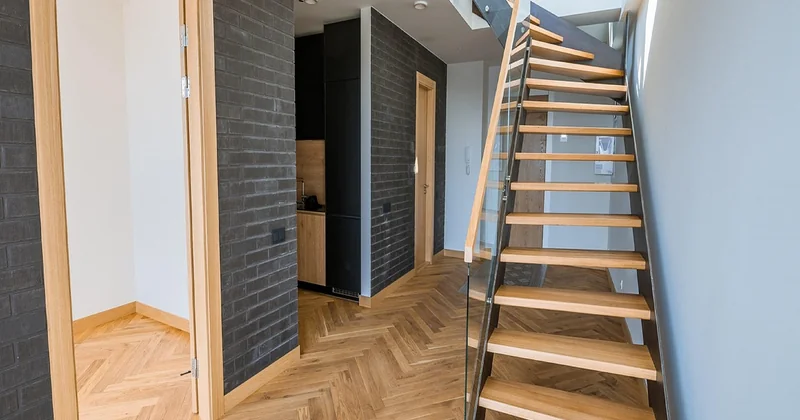
Solid hardwood is the classic mistake. It scratches, it stains at the seams, and once moisture gets into a gap, the board cups. Engineered hardwood with a thick wear layer does better — you can refinish it a couple of times — but it's still wood, and wood dents under a running dog.
What I actually recommend, ranked
- Luxury vinyl plank (LVP). Waterproof, scratch-resistant, and forgiving of the accidents you didn't catch. Costs roughly $3–6 per square foot installed in most markets, compared with $8–15 for solid hardwood.
- Porcelain tile. Nearly indestructible. Cold underfoot, harder on joints for older dogs, and unforgiving if you drop a glass.
- Engineered hardwood with a 4mm+ wear layer. The compromise choice — warmer than tile, refinishable, but not immune.
- Laminate. Cheap, but a single puddle left overnight can swell the core permanently. I've seen it happen in under six hours.
One detail nobody mentions: finish matters more than species. A polyurethane or aluminium-oxide finish resists scratching far better than an oiled or waxed surface. Oiled floors look gorgeous and show every claw mark as a dull streak. I learned that one on a client's floor, not my own, thankfully.
The grit problem
Here's what most guides skip. The deepest scratches in a wood floor rarely come from claws. They come from grit — sand, gravel, and dirt tracked in on paws, then ground into the surface as your dog walks. A $40 mat at every exterior door will save you more floor damage than a $2,000 upgrade.
Furniture materials compared: what holds up and what doesn't
Below is what I've observed across my own homes and roughly a dozen client projects. Prices are rough ranges, not quotes.
| Material | Claw resistance | Stain / odour | Rough cost premium | Best for |
|---|---|---|---|---|
| Microfibre (tight weave) | High | Good — cleans with water | Baseline | High-traffic seating |
| Bonded leather | Medium | Good, wipes clean | +10–20% | People who want the leather look |
| Top-grain leather | Medium — punctures, doesn't shred | Excellent | +40–80% | Long-term investment pieces |
| Outdoor / solution-dyed acrylic | High | Excellent, bleach-cleanable | +20–35% | Sunrooms, heavy shedders |
| Chenille, linen, tweed | Low | Poor — holds odour | Baseline | Nothing, if you have pets |
| Treated "performance" polyester | Medium | Mixed — treatment wears off | +15–25% | Budget-conscious buyers |
Notice that the most expensive option isn't the best one. Top-grain leather punctures — a cat landing on it leaves tiny holes that collect dirt forever. Bonded leather wipes clean but peels at the edges after a few years of use. The unglamorous answer, again, is microfibre.
Can you use outdoor fabric indoors?
Yes, and you should consider it. Solution-dyed acrylic — the stuff patio cushions are made from — resists fading, mould, and most stains, and you can clean it with a diluted bleach solution without wrecking the colour. Indoors it looks a little stiff at first, and it isn't as soft as microfibre, but for a household with a heavy shedder it's genuinely hard to beat.
The catch: it's not chew-proof. Nothing is chew-proof. If your dog destroys furniture out of boredom, no material will save you. That's a training problem wearing a decorating costume.
Renter-friendly protections that don't break your lease
If you rent, you can't rip out the carpet. You can, however, stop most of the damage before it happens — and get your deposit back.
- Adhesive felt pads on every furniture leg. Cheap, invisible, and they stop the drag marks that landlords photograph.
- Washable slipcovers over existing upholstery. A $90 cover has saved me a $900 sofa more than once.
- Area rugs with non-slip pads over wall-to-wall carpet. Protects the carpet beneath and gives you something you can actually clean.
- Corner guards and door-frame protectors — the clear adhesive kind. Landlords notice chewed doorframes immediately.
- An enzyme cleaner, bought before you need it. Regular detergent doesn't break down the proteins in pet urine, so the smell returns on humid days. Enzyme cleaners do.
One word of caution on adhesive products: test them on a hidden patch first. I pulled a strip of paint off a rented wall once by being impatient, and that cost me more than the deposit deduction would have.
How often do pet-friendly materials actually need cleaning?
More often than you think, and less aggressively than you'd fear. Microfibre upholstery benefits from a weekly vacuum with a brush attachment, and a spot clean as needed. Deep cleaning once every three to four months is usually enough for a single pet.
What you should avoid: steam cleaners on bonded leather, bleach on anything dyed, and any cleaner containing ammonia. Ammonia smells like urine to animals, which is exactly the signal you don't want to send.
The upgrade nobody mentions, and why it beats everything else
I've spent real money on flooring and furniture. The single change that reduced damage the most cost me nothing.
I started trimming my dogs' nails every ten days instead of whenever I remembered. Within a month, the scratch marks on my LVP stopped appearing. Long nails are the actual tool that damages surfaces — a trimmed nail meets the floor at a different angle and simply can't gouge it the same way. Everything else on this list is damage control. This is prevention.
So before you replace a floor or buy a new sofa, buy a decent pair of nail clippers and a mat for the front door. Then, if you still have budget left, work down the list: microfibre for seating, LVP or tile for floors, enzyme cleaner under the sink. The rest is decoration, and decoration can wait until the animal in your house has stopped treating your home like a chew toy.
They will, eventually. Probably.