You change one thing. You buy the bamboo toothbrush, the mesh produce bags, the stainless steel straws. Six weeks later the straws are rolling around a kitchen drawer and you feel vaguely guilty every time you open it. Sound familiar?
The problem isn't your willpower. It's the order you picked things in. Most sustainable living habits get adopted on visibility — the plastic you can see — when the actual footprint of a household sits somewhere else entirely, in rooms you don't think about. I learned this the expensive way, and it reshaped how I think about sustainable living habits to adopt at home.
Key Takeaways
- Home heating and hot water dominate a typical household's energy footprint — tackle those before you touch the kitchen gadgets
- Food waste is the highest-return habit change because it hits your wallet and your bin at the same time
- Standby power is genuinely worth fixing, but it's a one-evening job, not a lifestyle
- The habits that survive are the ones that cost you nothing to maintain — friction kills good intentions faster than laziness does
- Buying less, better, beats buying "green" replacements for things that already work
Sustainable living habits that actually shift your footprint
Here's the thing nobody tells you when you start: the ranking of household emissions is boring and predictable, and it almost never matches the ranking of things marketed to you as eco-friendly.
Heat. Hot water. Then food, then the car, then everything else. That's roughly the order for a typical home in a temperate climate. The bamboo straw sits somewhere near the bottom, alongside the reusable coffee cup you keep forgetting in the car.
I'm not saying don't buy the straw. I'm saying the sequence matters more than the effort, and most people burn their initial motivation on the smallest lever available.
Start with the two things you never see
Your heating system and your hot water tank run in the background. You never look at them, so you never think about them. Set the thermostat one degree lower than your usual setting and live with it for two weeks before you change anything else. One degree is roughly a five to ten percent cut in heating energy for most homes — a range that's been consistent across energy advice for years, not a number I'm inventing.
The same logic applies to hot water. Shorter showers, and a cylinder thermostat set to around 60°C rather than cranked to maximum. That second one is a plumber's recommendation, not a gadget you can buy in a shop, which is exactly why it gets ignored.
The boring truth about appliances
Replacing a working appliance with a more efficient one is almost never a carbon win. The manufacturing footprint of a fridge or a washing machine is large enough that you'd need years of slightly lower running costs to break even. Run the old one until it dies, then buy the most efficient model you can afford, and recycle the old one properly.
The food habits that pay you back immediately
Food waste is the rare case where the environmental argument and the money argument point in exactly the same direction, which makes it the easiest habit to justify to a sceptical partner or a teenager who thinks you've lost the plot.
Avoidable food waste in a typical household runs into the hundreds of euros or dollars a year. I tracked mine for a single quarter and it came to just over €180 — not catastrophic, but not nothing either, and that was after I already thought I was reasonably careful.
Shop your fridge before you shop the store
The single highest-leverage habit I've found is embarrassingly simple: before you write a shopping list, open the fridge and the vegetable drawer and build the week's meals around what's already there. Not "what could I make with this" as an abstract exercise — actually plan the meals around the wilting spinach and the half-used cabbage.
This one habit cut my food waste by maybe half in two months. No app, no composting equipment, no expense.
What about composting?
Composting is worth doing, but understand what it does and doesn't solve. Food scraps sent to landfill decompose without oxygen and release methane, which is a far more potent greenhouse gas than CO₂ over a short timeframe. Composting at home or through a municipal collection scheme avoids most of that. What it doesn't do is recover the energy, water and labour that went into growing food you didn't eat. Composting is the cleanup, not the fix.
Energy habits that don't require renovating anything
You don't need solar panels or a heat pump to make a dent. Those are decisions you make once every fifteen years, and they're worth doing, but they're not habits — they're projects.
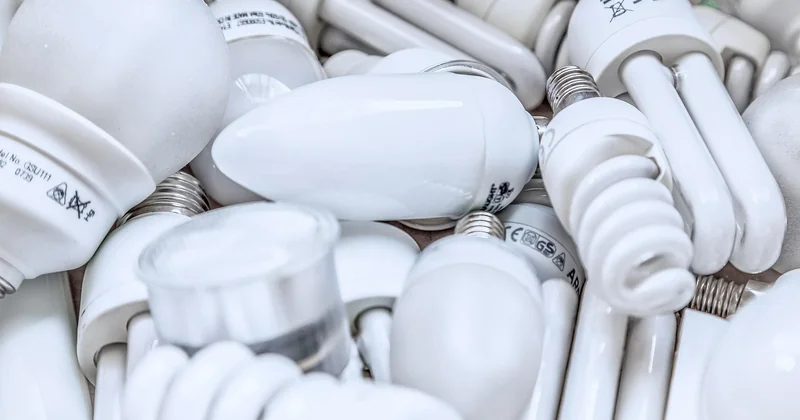
Habits are the small, repeatable choices. And the honest truth about most of them is that they're worth doing precisely because they're small.
Standby power is real, but it's a one-time fix
Devices left on standby draw power around the clock, and a home with a lot of them can waste a meaningful slice of its electricity bill on equipment that's doing nothing. The catch? This isn't a habit. It's a one-evening intervention: smart power strips, or just unplugging the chargers and consoles you don't use daily. After that, it fixes itself.
Worth doing. Not worth building an identity around.
Laundry and dishes
Two changes here, both free. Run the washing machine only with a full load, at the lowest temperature that actually gets your clothes clean — modern detergents work fine at 30°C for most loads. And skip the pre-rinse cycle on your dishwasher unless something is genuinely caked on. These are unglamorous, and they add up to more saved energy than most of the products sold to you as eco-friendly.
Water and consumption: sustainable living examples that stick
Water habits are where people tend to over-invest in hardware. Rain barrels, low-flow everything, timers. Some of it helps, some of it is theatre.
The water habits worth keeping
- Fix dripping taps — a slow drip wastes far more over a year than most people assume
- Keep a jug of drinking water in the fridge instead of running the tap until it's cold
- Water plants in the early morning or evening so less evaporates before it reaches the roots
- Only run the dishwasher and washing machine when full
- If you have a garden, watering the roots rather than the leaves is both more effective and uses less
None of these require a purchase. Which, honestly, is why they work — there's no gadget to lose interest in.
Buying less beats buying green
This is the part of sustainable living that gets the least airtime, because nobody can sell you a product for it. The most sustainable item is the one you already own. The second most sustainable is a used one.
I've watched people — including me, early on — replace functioning items with "eco" versions and feel virtuous about it. A new reusable bottle doesn't offset the old one it replaced, not for years. The habit that matters here is a mental pause before every purchase: do I actually need this, or am I buying the feeling of having done something?
How to compare the habits side by side
When you're deciding where to spend your attention, it helps to see the trade-offs laid out. Here's how the main habit categories stack up against each other.

| Habit area | Upfront cost | Effort to maintain | Impact on household footprint |
|---|---|---|---|
| Heating and hot water adjustments | None | Very low once set | High |
| Reducing food waste | None | Low, needs a weekly routine | Medium to high |
| Laundry and dishwasher habits | None | Very low | Medium |
| Standby power fixes | Low (power strips) | None after setup | Low to medium |
| Water-saving habits | None to low | Low | Low to medium |
| Buying fewer new things | None | Ongoing mental habit | High over time |
The pattern is hard to miss. The habits with the highest impact are the ones that cost nothing and require no equipment. The ones that cost money tend to rank lower.
What actually makes a habit stick
Friction is the enemy. Any habit that adds a step to your morning, or requires you to remember something at 7am, will fail within a month. I've tested this on myself repeatedly, with predictable results.
The habits that survived in my household all share one trait: they became invisible. The thermostat setting stopped being a decision. Checking the fridge before shopping became part of the same trip as checking the calendar. Nothing required willpower after the second week, because willpower was never the mechanism — routine was.
Which is why the advice to "start with one habit" is right, but incomplete. Start with one habit that adds no friction. Then let it disappear into your routine before you add the next one.
A realistic starting sequence
- Drop the thermostat one degree and change nothing else for two weeks
- Add the fridge-first shopping routine
- Switch laundry to 30°C and full loads only
- Do the standby power sweep — one evening, then forget it
- Only then consider the purchases: reusable items, efficient replacements, garden gear
By the time you reach step five, you'll have already made the biggest cuts, and you'll be buying the right things instead of the visible ones.
Frequently asked questions
What are the best sustainable living ideas at home for a renter?
Renters can't change the boiler or install solar, but the highest-impact habits — thermostat settings, food waste, laundry temperature, buying less — are all available to you. The only thing you're locked out of is the hardware, and as the table above shows, hardware ranks lower than behaviour anyway.

Do small habits really matter compared to big decisions?
Both matter, but they operate on different timescales. Big decisions — insulation, a heat pump, going car-free — happen once a decade. Habits happen daily. A single well-chosen habit, sustained for years, can outweigh one major appliance upgrade. The mistake is treating the two as competitors when they're actually complements.
How long before a new habit feels normal?
Longer than the popular "21 days" claim suggests. In my experience, somewhere between four and eight weeks for something genuinely new, and much faster if the habit removes a step rather than adding one. That's the practical argument for choosing friction-free habits first: they cross the threshold sooner.
The habit you should probably drop
Guilt.
It's the one habit in this whole space that has a measurable negative effect, because it makes people avoid the topic entirely. Every person I know who has maintained sustainable habits for years did it by being slightly bored with the whole thing — treating it as maintenance, like changing the filter on a vacuum, rather than as a moral project.
The next time you're standing in your kitchen wondering whether the plastic bag in your hand cancels out the thermostat you lowered last month: it doesn't. Check the fridge before you shop this week. That's the whole assignment.